 OnlineCalculator
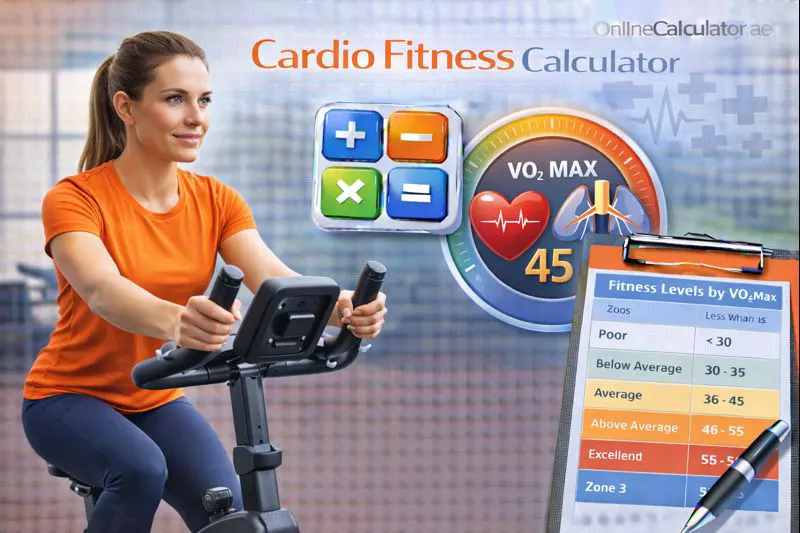
Calculate your cardio fitness level and VO2 max score instantly with our free Health & Fitness calculator. Whether you're training at Fitness First Dubai or jogging along Jumeirah Beach, understanding your cardiovascular fitness helps you optimize workouts and monitor heart health. Our calculator provides accurate assessments based on your age, gender, resting heart rate, and activity level—giving you the insights you need to reach your fitness goals in the UAE.
What Is Cardio Fitness and Why Does It Matter?
Cardio fitness, measured by VO2 max, indicates how efficiently your body uses oxygen during exercise. This metric is crucial for athletes, fitness enthusiasts, and anyone concerned about heart health. The Online Calculator UAE platform brings you this essential fitness tool tailored for UAE residents.
Understanding your cardio fitness level helps you:
- Optimize training intensity - Know whether you're pushing hard enough or overtraining
- Track cardiovascular health - Monitor improvements in heart and lung efficiency over time
- Set realistic fitness goals - Base your targets on actual physiological measurements
- Reduce health risks - Higher cardio fitness correlates with lower risk of heart disease and diabetes
This calculator uses scientifically validated formulas that consider your personal metrics to estimate your VO2 max—the gold standard for measuring aerobic fitness. Whether you're a CrossFit enthusiast in Dubai Marina or a weekend runner at Al Mamzar Park, this tool provides valuable insights into your cardiovascular capacity.
html
How the Cardio Fitness Calculator Works
Our calculator estimates your VO2 max using the non-exercise prediction method, which has been validated against laboratory testing. This approach considers multiple factors that influence cardiovascular fitness without requiring you to perform an exhaustive exercise test.
The Calculation Formula
The calculator uses gender-specific equations that factor in:
- Resting Heart Rate (RHR) - Lower values indicate better cardiovascular efficiency
- - VO2 max naturally declines with age
- Body Mass Index (BMI) - Calculated from your height and weight
- - Your typical weekly exercise intensity and frequency
For Men:
VO2 max = 56.363 + (1.921 × PA-R) - (0.381 × Age) - (0.754 × BMI) - (0.688 × RHR)
For Women:
VO2 max = 50.513 + (1.589 × PA-R) - (0.289 × Age) - (0.552 × BMI) - (0.614 × RHR)
PA-R represents your Physical Activity Rating on a scale from 0-10, where sedentary lifestyle equals 0 and highly active equals 10. The calculator then categorizes your result into fitness levels: Poor, Below Average, Average, Above Average, Good, Excellent, or Superior.
Step-by-Step Process
Step 1: Enter your age, gender, height, and weight to calculate BMI automatically.
Step 2: Input your resting heart rate. Measure this by checking your pulse for 60 seconds immediately after waking up, before getting out of bed.
Step 3: Select your physical activity level based on weekly exercise habits.
Step 4: The calculator processes your data and displays your estimated VO2 max score along with your fitness category.
Important Note: While this calculator provides reliable estimates, clinical VO2 max testing performed at facilities like NMC Royal Hospital or Mediclinic Dubai offers the most accurate measurements through direct gas exchange analysis during maximal exercise.
Example 1: Ahmed - Office Worker Starting His Fitness Journey
Profile: Ahmed is a 32-year-old software developer working in Dubai Internet City. He weighs 85 kg, stands 175 cm tall, and has recently started walking 30 minutes during lunch breaks after realizing his sedentary lifestyle needs to change.
Input Values:
- Age: 32 years
- Gender: Male
- Weight: 85 kg
- Height: 175 cm
- Resting Heart Rate: 78 bpm
- Activity Level: 3 (Light activity, 1-2 days/week)
Calculation:
First, BMI = 85 ÷ (1.75)² = 27.8
VO2 max = 56.363 + (1.921 × 3) - (0.381 × 32) - (0.754 × 27.8) - (0.688 × 78)
VO2 max = 56.363 + 5.763 - 12.192 - 20.961 - 53.664
VO2 max = 24.7 ml/kg/min (Poor)
Interpretation: Ahmed's score falls in the "Poor" category for his age group. However, this baseline measurement gives him a starting point. By increasing his daily walking routine and adding strength training, he can track improvements over the next 3-6 months.
Example 2: Fatima - Regular Gym Enthusiast
Profile: Fatima is a 28-year-old marketing manager who attends group fitness classes at Gold's Gym Dubai Marina four times weekly. She maintains a balanced diet and prioritizes her macronutrient intake.
Input Values:
- Age: 28 years
- Gender: Female
- Weight: 62 kg
- Height: 165 cm
- Resting Heart Rate: 58 bpm
- Activity Level: 7 (Moderate to vigorous, 4-5 days/week)
Calculation:
BMI = 62 ÷ (1.65)² = 22.8
VO2 max = 50.513 + (1.589 × 7) - (0.289 × 28) - (0.552 × 22.8) - (0.614 × 58)
VO2 max = 50.513 + 11.123 - 8.092 - 12.586 - 35.612
VO2 max = 42.1 ml/kg/min (Good)
Interpretation: Fatima's "Good" rating reflects her consistent training schedule. Her low resting heart rate (58 bpm) indicates excellent cardiovascular adaptation. To reach "Excellent" status, she might incorporate more zone 2 cardio training to further improve aerobic capacity.
Example 3: Mohammed - Competitive Runner
Profile: Mohammed is a 35-year-old competitive runner training for the Dubai Marathon. He runs 60-80 km weekly and cross-trains with cycling on rest days. He monitors his heart rate zones during every workout.
Input Values:
- Age: 35 years
- Gender: Male
- Weight: 68 kg
- Height: 178 cm
- Resting Heart Rate: 48 bpm
- Activity Level: 10 (Very high intensity, 6-7 days/week)
Calculation:
BMI = 68 ÷ (1.78)² = 21.5
VO2 max = 56.363 + (1.921 × 10) - (0.381 × 35) - (0.754 × 21.5) - (0.688 × 48)
VO2 max = 56.363 + 19.21 - 13.335 - 16.211 - 33.024
VO2 max = 55.8 ml/kg/min (Excellent)
Interpretation: Mohammed's score places him in the "Excellent" category, reflecting his dedicated training regimen. His remarkably low resting heart rate (48 bpm) demonstrates exceptional cardiovascular efficiency. Elite marathon runners often score 60+ ml/kg/min, giving Mohammed a clear target for his training progression.
Accuracy and Limitations
This calculator provides estimates within 10-15% of laboratory-measured VO2 max for most individuals. However, results can vary based on factors like hydration status, stress levels, medication use, and genetic predisposition. Athletes with specific training backgrounds (swimmers, cyclists) may receive less accurate estimates as the formula was developed primarily for runners and general fitness populations.
When to Measure Your Resting Heart Rate
For the most accurate results, measure your resting heart rate under consistent conditions. The best time is immediately upon waking, before consuming caffeine or engaging in any physical activity. Take measurements on three consecutive mornings and use the average. Factors that temporarily elevate RHR include illness, dehydration, alcohol consumption, and poor sleep quality.
UAE Climate Considerations
The UAE's hot climate can affect cardiovascular performance, especially during summer months when temperatures exceed 40°C. Your cardio fitness level may appear lower when training outdoors in extreme heat compared to air-conditioned gym environments. Many UAE fitness enthusiasts adjust their training schedules to early morning (5-7 AM) or evening (7-9 PM) sessions to optimize performance.
Common Mistakes to Avoid
Measuring heart rate incorrectly: Ensure you count beats for a full 60 seconds rather than multiplying a 15-second count by four, as this reduces accuracy.
Overestimating activity level: Be honest about your actual weekly exercise. Occasional weekend workouts don't qualify as "regular moderate activity."
Ignoring sleep and recovery: Your cardio fitness improves during recovery periods, not during workouts themselves. UAE residents often struggle with adequate sleep due to busy lifestyles and should prioritize 7-9 hours nightly.
Expert Tips for Improving Cardio Fitness
Incorporate variety in your training by combining steady-state cardio with interval work. Use your as a baseline and retest every 8-12 weeks to track progress. Focus on consistency rather than intensity—three moderate sessions weekly produce better long-term results than sporadic intense workouts. Consider working with certified trainers at facilities like Warehouse Gym Dubai or F45 Training locations across the UAE for personalized programming.
Start Tracking Your Cardio Fitness Today
Understanding your cardiovascular fitness level is the first step toward optimizing your health and performance. Use our free cardio fitness calculator to establish your baseline, then retest regularly as you progress through your fitness journey. Whether you're training for competitive events, working toward personal health goals, or simply maintaining wellness in the UAE's active lifestyle community, this tool provides valuable insights to guide your efforts.
For medical concerns or comprehensive cardiovascular assessments, consult healthcare professionals at UAE institutions like Burjeel Hospital, NMC Healthcare, or Aster Hospitals. Combine this calculator with proper medical guidance for the best health outcomes.