 OnlineCalculator
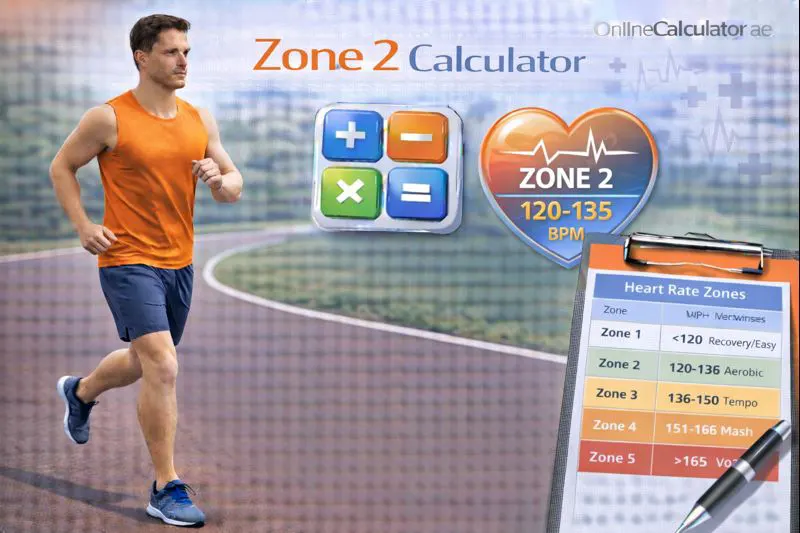
Calculate your personalized Zone 2 heart rate range for maximum fat burning and cardiovascular endurance. Whether you're training at Fitness First in Dubai Marina or jogging along Jumeirah Beach, knowing your Zone 2 helps you exercise smarter, not harder. This free calculator provides accurate heart rate zones based on your age and fitness level, helping UAE residents achieve their health goals efficiently.
What is Zone 2 Training and Why It Matters
Zone 2 training refers to exercising at a moderate intensity where your body primarily burns fat for fuel while building aerobic endurance. This heart rate zone sits at approximately 60-70% of your maximum heart rate, making it the sweet spot for sustainable cardiovascular improvement.
Our Zone 2 Calculator helps you determine your exact heart rate range so you can:
- Maximize fat burning during workouts without overexertion
- Build cardiovascular endurance for long-term health benefits
- Improve metabolic efficiency and insulin sensitivity
- Train consistently without burnout or excessive fatigue
- Track progress accurately with heart rate monitors and fitness watches
Developed using established exercise physiology principles, this calculator is trusted by fitness enthusiasts across Online Calculator UAE for accurate, personalized training zones. Whether you're a beginner at Warehouse Gym or an experienced athlete training for the Dubai Marathon, Zone 2 training forms the foundation of effective cardio programming.
html
How the Zone 2 Calculator Works
Understanding your Zone 2 heart rate requires calculating your maximum heart rate first, then determining the appropriate percentage range. Our calculator uses scientifically validated formulas to provide accurate results.
The Calculation Method
Step 1: Maximum Heart Rate (MHR)
The most common formula is: MHR = 220 - Your Age
For example, a 30-year-old would have an estimated MHR of 190 beats per minute (bpm). While individual variation exists, this formula provides a reliable baseline for most people.
Step 2: Zone 2 Range Calculation
Zone 2 typically falls between 60-70% of your maximum heart rate:
- Lower limit: MHR × 0.60
- Upper limit: MHR × 0.70
Step 3: Adjustments for Fitness Level
Our calculator allows you to adjust for your current fitness level:
- Beginner: May use 55-65% for easier adaptation
- Intermediate: Standard 60-70% range
- Advanced: Can handle 65-75% while maintaining Zone 2 benefits
Important Notes: Heart rate zones are estimates. Individual factors like genetics, medications (beta-blockers), heat, humidity, and stress can affect heart rate. In Dubai's hot climate, your heart rate may run 5-10 bpm higher during outdoor activities. Always listen to your body and consult healthcare professionals before starting new exercise programs.
The "talk test" provides a practical check: in Zone 2, you should be able to hold a conversation but with slightly labored breathing. If you can't speak comfortably, you're likely in Zone 3 or higher.
Example 1: Sarah, 35-Year-Old Marketing Manager in Dubai
Profile: Sarah works in DIFC and wants to improve her fitness. She's moderately active, walking to work and doing occasional yoga, but hasn't done structured cardio training before.
Calculation:
- Age: 35 years
- Maximum Heart Rate: 220 - 35 = 185 bpm
- Zone 2 Lower Limit: 185 × 0.60 = 111 bpm
- Zone 2 Upper Limit: 185 × 0.70 = 130 bpm
- Her Zone 2 Range: 111-130 bpm
Application: Sarah uses a fitness tracker during her morning walks along Dubai Canal. She maintains her heart rate between 111-130 bpm by adjusting her pace. At 120 bpm, she can comfortably chat with her walking partner while burning fat efficiently. After 12 weeks, she notices improved endurance and has lost 4 kg without feeling exhausted.
Example 2: Ahmed, 42-Year-Old Engineer Training for Health
Profile: Ahmed lives in Abu Dhabi and recently got a health checkup suggesting he improve his cardiovascular fitness. He's concerned about his cholesterol levels and wants sustainable exercise.
Calculation:
- Age: 42 years
- Maximum Heart Rate: 220 - 42 = 178 bpm
- Zone 2 Lower Limit: 178 × 0.60 = 107 bpm
- Zone 2 Upper Limit: 178 × 0.70 = 125 bpm
- His Zone 2 Range: 107-125 bpm
Application: Ahmed cycles on the Corniche cycle path 4 times weekly, keeping his heart rate monitored via his Apple Watch. He maintains 115-120 bpm for 45-minute sessions. This intensity feels comfortable—he's working but not gasping for air. Combined with monitoring his daily energy expenditure, Ahmed's doctor reports improved cardiovascular markers after 3 months.
Example 3: Fatima, 28-Year-Old Fitness Enthusiast in Sharjah
Profile: Fatima is an experienced gym-goer who does high-intensity training 3 times weekly. She wants to add Zone 2 cardio for recovery and endurance without interfering with her strength training.
Calculation:
- Age: 28 years
- Maximum Heart Rate: 220 - 28 = 192 bpm
- Zone 2 Lower Limit: 192 × 0.65 = 125 bpm (adjusted for advanced fitness)
- Zone 2 Upper Limit: 192 × 0.75 = 144 bpm (adjusted for advanced fitness)
- Her Zone 2 Range: 125-144 bpm
Application: Fatima uses the incline treadmill at her Al Qasba gym for 30-minute Zone 2 sessions on rest days from lifting. At 135 bpm, she's working steadily but not depleting glycogen stores needed for her strength workouts. This approach complements her focus on optimizing body composition while maintaining recovery capacity.
Climate Considerations for UAE Athletes
Dubai and Abu Dhabi's hot, humid climate significantly affects heart rate during outdoor exercise. Expect your heart rate to run 5-15 bpm higher in summer temperatures (May-September) compared to indoor, air-conditioned environments. Early morning sessions (5:00-7:00 AM) or evening workouts (7:00-9:00 PM) provide cooler conditions for outdoor Zone 2 training.
Common Mistakes to Avoid
Going too hard: Many beginners push into Zone 3-4, defeating Zone 2's purpose. If you can't maintain a conversation, you're likely too high. Use a heart rate monitor rather than perceived effort alone.
Insufficient duration: Zone 2 benefits emerge from sustained effort. Aim for minimum 30-minute sessions, with 45-60 minutes being ideal. Metabolic adaptations occur when you maintain the zone consistently.
Ignoring individual variation: The 220-age formula is an estimate. Athletes may have lower max heart rates; some individuals naturally run higher. If calculated zones feel wrong, consider a professional VO2 max assessment at sports medicine facilities in Dubai Healthcare City.
Expert Tips for Effective Zone 2 Training
Consistency matters more than intensity: Three 45-minute Zone 2 sessions weekly produce better long-term results than sporadic high-intensity training. Build a sustainable routine you can maintain year-round.
Combine with strength training: Zone 2 cardio complements resistance training without interfering with recovery. Schedule Zone 2 sessions on rest days or after lifting to optimize muscle preservation during fat loss.
Track progress over time: Monitor the pace or power output you can maintain at the same heart rate. As fitness improves, you'll move faster at the same heart rate—this indicates enhanced aerobic capacity and fat oxidation.
Start Your Zone 2 Training Journey Today
Use our free Zone 2 Calculator to discover your personalized heart rate training zones and transform your cardiovascular health. Whether you're exercising at premium facilities like the Burj Club or community parks across UAE, knowing your Zone 2 helps you train smarter and achieve better results.
Calculate your zones above, grab your heart rate monitor, and commit to 3-4 weekly sessions. Track your progress as you build endurance, burn fat efficiently, and improve your overall health. For comprehensive fitness planning, explore our complete suite of Health & Fitness calculators to optimize every aspect of your wellness journey.
Your path to better cardiovascular health starts with understanding your body's optimal training zones. Calculate, train, and thrive.