 OnlineCalculator
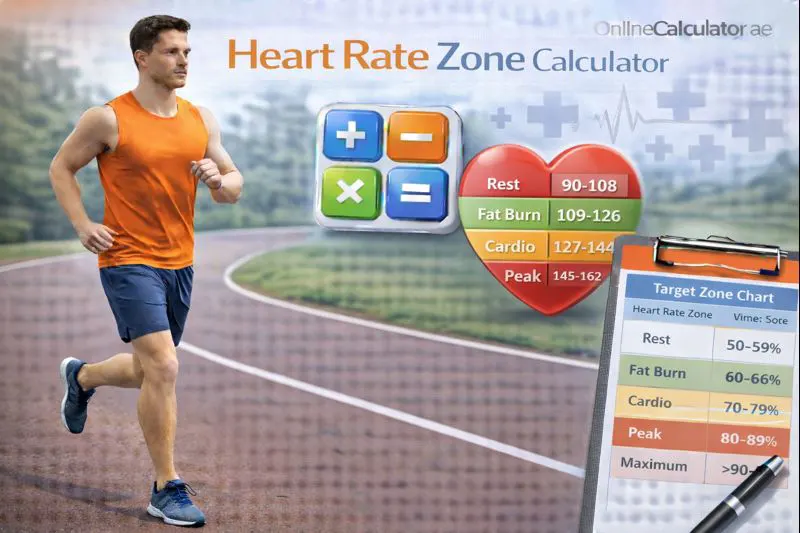
Calculate your personalized heart rate training zones instantly and transform your fitness routine. Whether you're training at Fitness First Dubai Marina or jogging along Jumeirah Beach, understanding your heart rate zones helps you maximize fat burning, improve cardiovascular endurance, and achieve your fitness goals faster. This free calculator provides accurate zone recommendations based on your age and resting heart rate.
What Is the Heart Rate Zone Calculator?
The Heart Rate Zone Calculator is a scientific tool designed for fitness enthusiasts across the UAE to determine their optimal heart rate ranges during different types of exercise. By analyzing your age and resting heart rate, this calculator identifies five distinct training zones that serve specific fitness purposes.
Understanding your heart rate zones is essential for effective training. Each zone targets different physiological adaptations, from fat burning to peak athletic performance. This calculator is particularly valuable for:
- Weight loss seekers - Identify the optimal zone for maximum fat oxidation
- Endurance athletes - Build aerobic capacity for marathons and triathlons
- Fitness beginners - Train safely without overexertion
- Advanced athletes - Fine-tune high-intensity interval training sessions
This calculator uses the Karvonen Formula, recognized by sports scientists and fitness professionals worldwide as one of the most accurate methods for determining training zones. Whether you're working out at Online Calculator UAE or training independently, these personalized zones ensure you're exercising at the right intensity.
How Does the Heart Rate Zone Calculator Work?
The calculator employs the scientifically-validated Karvonen Formula to determine your personalized training zones. This method accounts for both your maximum heart rate and resting heart rate, providing more accurate results than simplified age-based calculations.
The Calculation Method
Step 1: Calculate Maximum Heart Rate (MHR)
The formula uses: MHR = 220 - Your Age
For example, a 30-year-old would have an estimated MHR of 190 beats per minute (bpm).
Step 2: Determine Heart Rate Reserve (HRR)
HRR = Maximum Heart Rate - Resting Heart Rate
This represents your heart's working capacity between rest and maximum effort.
Step 3: Calculate Each Training Zone
Target Heart Rate = (HRR × Intensity %) + Resting Heart Rate
The calculator applies different intensity percentages for each of the five zones.
The Five Heart Rate Zones
Zone 1 (50-60%): Very Light - Warm-up and recovery
Zone 2 (60-70%): Light - Fat burning and base fitness
Zone 3 (70-80%): Moderate - Aerobic endurance
Zone 4 (80-90%): Hard - Anaerobic threshold
Zone 5 (90-100%): Maximum - Peak performance and speed
Important Note: Your resting heart rate should be measured first thing in the morning before getting out of bed. For most accurate results, take measurements over three consecutive days and use the average. Athletes and regular exercisers typically have lower resting heart rates (40-60 bpm), while sedentary individuals may see rates of 70-90 bpm.
The calculator also considers that individual variations exist. Factors like medications (beta-blockers), temperature, humidity (especially relevant in UAE's climate), hydration status, and stress levels can all influence heart rate responses during exercise.
Example 1: Beginner Focusing on Weight Loss
Profile: Sarah, 35-year-old marketing executive in Dubai, resting heart rate of 75 bpm, wants to lose weight by training at Gold's Gym DIFC.
Calculation Process:
Maximum Heart Rate = 220 - 35 = 185 bpm
Heart Rate Reserve = 185 - 75 = 110 bpm
Her Training Zones:
Zone 1: (110 × 0.50) + 75 = 130-141 bpm (warm-up)
Zone 2: (110 × 0.60) + 75 = 141-152 bpm (fat burning)
Zone 3: (110 × 0.70) + 75 = 152-163 bpm (aerobic)
Zone 4: (110 × 0.80) + 75 = 163-174 bpm (threshold)
Zone 5: (110 × 0.90) + 75 = 174-185 bpm (maximum)
Recommendation: Sarah should spend 70% of her workout time in Zone 2 (141-152 bpm) for optimal fat burning, with the remaining time split between Zone 1 for warm-up and Zone 3 for cardiovascular improvement. Check your calorie deficit needs to complement this training.
Example 2: Experienced Runner Training for Marathon
Profile: Ahmed, 28-year-old engineer in Abu Dhabi, resting heart rate of 52 bpm (well-trained), preparing for Dubai Marathon.
Calculation Process:
Maximum Heart Rate = 220 - 28 = 192 bpm
Heart Rate Reserve = 192 - 52 = 140 bpm
His Training Zones:
122-136 bpm (recovery runs)
136-150 bpm (long steady runs)
150-164 bpm (tempo runs)
164-178 bpm (lactate threshold)
178-192 bpm (sprint intervals)
Recommendation: Ahmed should build his aerobic base with 80% of weekly mileage in Zone 2, incorporate weekly tempo runs in Zone 3, and add interval sessions in Zones 4-5. Understanding his VO2 max capacity would further optimize his training plan.
Example 3: Senior Citizen Starting Fitness Journey
Profile: Mohammed, 65-year-old retiree in Sharjah, resting heart rate of 82 bpm, beginning gentle exercise program recommended by doctor.
Calculation Process:
Maximum Heart Rate = 220 - 65 = 155 bpm
Heart Rate Reserve = 155 - 82 = 73 bpm
His Training Zones:
119-126 bpm (ideal starting point)
126-133 bpm (maintenance cardio)
133-140 bpm (gradual progression)
140-147 bpm (avoid initially)
147-155 bpm (not recommended)
Recommendation: Mohammed should focus exclusively on Zone 1 for the first 8-12 weeks, gradually introducing Zone 2 activities like brisk walking at Sharjah Corniche. Medical clearance is essential before progressing beyond Zone 2. Monitoring blood pressure levels alongside heart rate is crucial for this age group.
UAE-Specific Considerations
Training in the UAE's climate requires special attention to heart rate monitoring. During summer months (May-September), when temperatures exceed 40°C, your heart rate can be 10-15 bpm higher than normal for the same workout intensity. Early morning sessions (5-7 AM) or evening training (after 7 PM) help minimize heat-related heart rate elevation.
Humidity levels in coastal areas like Dubai and Abu Dhabi also affect cardiovascular response. The combination of heat and humidity increases blood flow to the skin for cooling, which elevates heart rate even at lower exercise intensities. Consider reducing your target zones by 5-10 bpm during peak summer or train in air-conditioned facilities.
Common Training Mistakes to Avoid
Training Too Hard, Too Often: Many enthusiasts at UAE gyms spend excessive time in Zones 4-5, leading to overtraining and burnout. The 80/20 rule applies - 80% of training should occur in Zones 1-2, with only 20% in higher intensity zones.
Ignoring Recovery Days: Zone 1 isn't wasted time. Active recovery in this zone promotes blood flow, reduces muscle soreness, and prepares your body for harder sessions. Schedule at least 2-3 Zone 1 sessions weekly.
Inaccurate Heart Rate Measurement: Chest strap monitors provide 99% accuracy, while wrist-based devices can vary by 5-10 bpm during high-intensity exercise. For precise zone training, invest in quality monitoring equipment available at sports retailers across Dubai Mall or online.
Expert Training Tips
Monitor your resting heart rate weekly. A decreasing trend indicates improving fitness, while an elevated resting heart rate (5+ bpm above normal) signals inadequate recovery or potential illness. Adjust training intensity accordingly.
Combine heart rate zone training with Health & Fitness calculator tools to track your overall progress. Understanding your daily energy expenditure helps align nutrition with training demands.
Start Training Smarter Today
Calculate your personalized heart rate zones now and transform your fitness routine with science-backed training. Whether you're preparing for the Al Mouj Muscat Marathon, training at Fitness First locations across the UAE, or starting your wellness journey at community parks in Arabian Ranches, knowing your zones ensures every workout counts.
For comprehensive fitness planning, explore our complete range of Health & Fitness calculators to track your basal metabolic rate, optimize your protein intake, and monitor overall progress toward your goals.
Remember, heart rate training is a tool, not a strict rule. Listen to your body, stay consistent, and adjust based on how you feel. Combined with proper nutrition, adequate recovery, and progressive overload, zone-based training accelerates results while reducing injury risk.