 OnlineCalculator
What Is an Implantation Calculator?
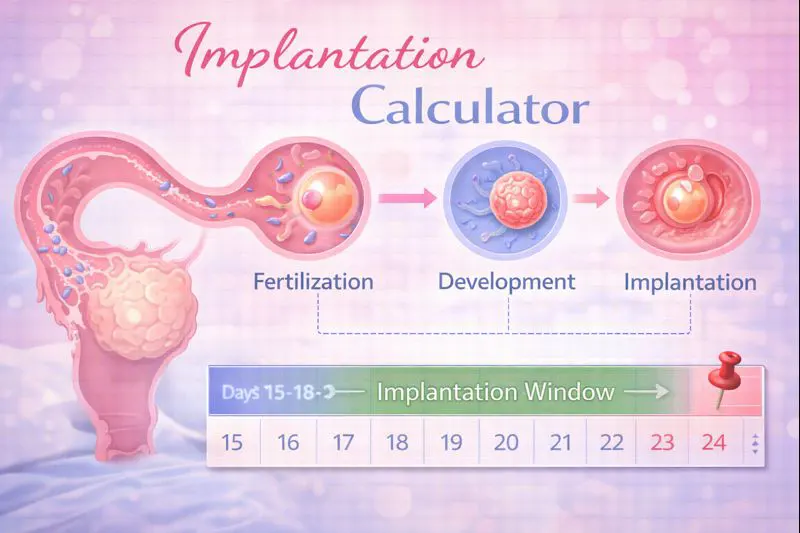
An implantation calculator estimates the specific days when a fertilized egg is most likely to attach to your uterine lining. This typically occurs 6 to 12 days after ovulation, with the most common implantation day being 9 days post-ovulation (DPO).
Understanding your implantation window helps you:
- Time pregnancy tests accurately - Know when hCG levels become detectable
- Recognize implantation symptoms - Identify light spotting or cramping during the window
- Plan your fertility journey - Coordinate with your ovulation tracking
- Reduce anxiety - Understand normal timelines instead of testing too early
This calculator uses established reproductive science to provide reliable estimates based on your cycle information. Women across the UAE use this tool to track their fertility journey with confidence.
IMPLANTATION CALCULATOR - PASTE THIS IN ELEMENTOR HTML WIDGET
How the Implantation Calculator Works
The calculator uses your ovulation date or last menstrual period (LMP) to predict your implantation window. Here's the science behind the calculation:
The Calculation Method
Step 1: Determine Ovulation Date
If you provide your LMP, the calculator adds 14 days (for a standard 28-day cycle) or uses your specific cycle length to estimate ovulation. If you know your ovulation date, this step is skipped.
Step 2: Calculate Fertilization Window
Fertilization typically occurs within 12 to 24 hours after ovulation. The egg remains viable for this short window, while sperm can survive up to 5 days in the reproductive tract.
Step 3: Add Implantation Timeline
After fertilization, the embryo travels through the fallopian tube and develops for approximately 5 to 7 days before reaching the uterus. Implantation then occurs 6 to 12 days post-ovulation, with these probabilities:
- 6 DPO: Less than 0.5% implantation rate
- 7 DPO: Approximately 7.5% implantation rate
- 8 DPO: Approximately 20% implantation rate
- 9 DPO: Approximately 40% implantation rate (peak day)
- 10 DPO: Approximately 25% implantation rate
- 11 DPO: Approximately 7% implantation rate
- 12 DPO: Less than 1% implantation rate
Important Considerations
The calculator provides estimates based on average cycle patterns. Individual variations exist due to factors like stress, hormonal imbalances, cycle irregularities, and overall health. For personalized guidance, consult with fertility specialists at leading UAE hospitals like Mediclinic Middle East, Saudi German Hospital, or American Hospital Dubai.
Remember that implantation is not the same as a detectable pregnancy. It takes an additional 2 to 3 days after implantation for hCG levels to rise enough for home pregnancy tests to detect.
Example 1: Regular 28-Day Cycle
Scenario: Fatima, a 29-year-old marketing manager in Dubai Marina, has a regular 28-day cycle. Her last period started on January 1, 2026.
Calculation:
- LMP: January 1, 2026
- Estimated ovulation: January 1 + 14 days = January 15, 2026
- Fertilization window: January 15-16, 2026
- Implantation window: January 21-27, 2026 (6-12 DPO)
- Peak implantation day: January 24, 2026 (9 DPO)
- Earliest reliable test date: January 27, 2026 (12 DPO)
Result: Fatima should watch for potential implantation symptoms between January 21-27, with the highest probability on January 24. She can take a home pregnancy test on or after January 27 for the most reliable results.
Example 2: Longer 32-Day Cycle
Scenario: Aisha, a 32-year-old teacher in Abu Dhabi, has a 32-day cycle. She tracks ovulation and confirmed it occurred on February 18, 2026, using an ovulation test kit.
Calculation:
- Known ovulation date: February 18, 2026
- Fertilization window: February 18-19, 2026
- Implantation window: February 24 - March 2, 2026 (6-12 DPO)
- Peak implantation day: February 27, 2026 (9 DPO)
- Earliest reliable test date: March 2, 2026 (12 DPO)
Result: Since Aisha knows her exact ovulation date, her implantation window is more precisely calculated. She might experience light spotting or mild cramping around February 27, which could indicate implantation.
Example 3: Irregular Cycle with Ovulation Tracking
Scenario: Mariam, a 27-year-old graphic designer in Sharjah, has irregular cycles ranging from 26 to 35 days. She uses basal body temperature tracking and confirms ovulation occurred on March 10, 2026.
Calculation:
- Confirmed ovulation: March 10, 2026
- Fertilization window: March 10-11, 2026
- Implantation window: March 16-22, 2026 (6-12 DPO)
- Peak implantation day: March 19, 2026 (9 DPO)
- Earliest reliable test date: March 22, 2026 (12 DPO)
- Expected period (if not pregnant): Variable, but likely March 24-27, 2026
Result: For women with irregular cycles, knowing the exact ovulation date is crucial for accurate predictions. Mariam should wait until at least March 22 before testing, even though she might be tempted to test earlier. Her tracking through methods like body temperature monitoring provides the most accurate timeline.
Recognizing Implantation Signs
While not all women experience noticeable symptoms, some common implantation signs include:
- Light spotting: Pink or brown discharge lasting a few hours to 2 days (much lighter than a period)
- Mild cramping: Subtle twinges on one side of the lower abdomen
- Slight temperature dip: A brief drop in basal body temperature, followed by an increase
- Breast tenderness: Hormonal changes beginning shortly after implantation
Common Mistakes to Avoid
Testing too early: Many women test before hCG levels are detectable, leading to false negatives and unnecessary disappointment. Wait at least 12 DPO for accurate results, ideally 14 DPO (the day of your expected period).
Confusing implantation bleeding with periods: Implantation spotting is significantly lighter than menstrual bleeding. It doesn't require pads or tampons and typically appears as light pink or brown discharge.
Ignoring cycle variations: Every woman's cycle is unique. If you have irregular cycles, tracking ovulation through methods like LH strips, cervical mucus observation, or ultrasound monitoring provides better accuracy than calendar predictions alone.
Expert Tips for Tracking
Combine your implantation calculator results with other Health & Fitness calculator tools for comprehensive fertility tracking. Monitor your menstrual cycle patterns, track your fertile window, and maintain a healthy lifestyle to optimize your chances of conception.
Women in the UAE can access excellent reproductive healthcare through facilities like Conceive Fertility Center, Fakih IVF, and HealthPlus Fertility. These specialists can provide personalized guidance based on your unique situation.
Start Tracking Your Implantation Window Today
Use our free implantation calculator above to estimate your most fertile days and implantation timeline. Understanding your cycle empowers you to make informed decisions about your fertility journey. For complex fertility questions or if you've been trying to conceive for an extended period, consider scheduling a consultation with reproductive specialists at accredited UAE healthcare facilities.
Remember that every fertility journey is unique, and while calculators provide helpful estimates, they don't replace professional medical advice. Track your cycles consistently, maintain a healthy lifestyle, and stay positive throughout your conception journey.