 OnlineCalculator
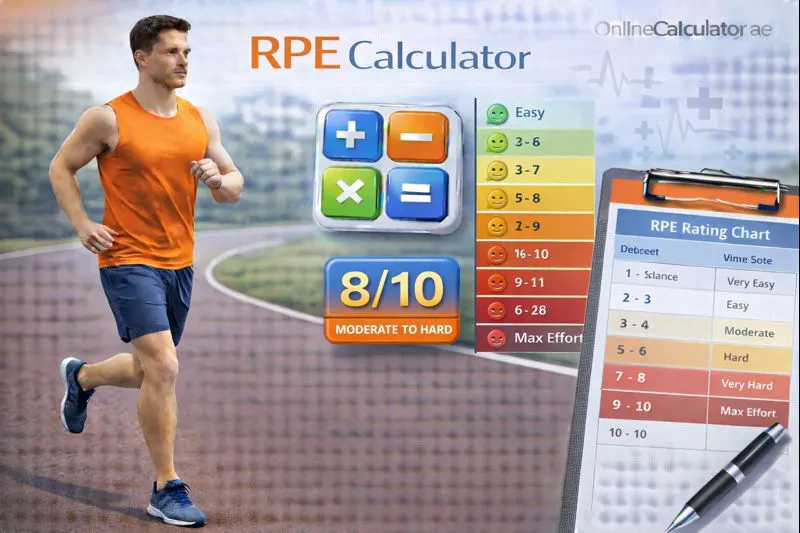
What is an RPE Calculator?
The RPE Calculator helps you measure workout intensity using the Rate of Perceived Exertion scale, a scientifically validated method for monitoring how hard your body is working during exercise. This tool translates your subjective feeling of effort into a numerical scale that guides training decisions.
RPE is particularly valuable for athletes and fitness enthusiasts in the UAE who train in varying conditions—from air-conditioned gyms to outdoor facilities where heat and humidity affect performance.
Key Benefits:
- Personalized training intensity: Adjust workouts based on daily recovery and energy levels
- Injury prevention: Avoid overtraining by monitoring effort accurately
- Progress tracking: Compare workout difficulty over time as fitness improves
- Heat adaptation: Account for UAE climate when exercising outdoors at Kite Beach or Yas Marina
Popular gyms across the UAE including Warehouse Gym Dubai, GymNation branches, and premium facilities at DIFC use RPE-based training to help members achieve sustainable results without burnout.
html
How Does the RPE Scale Work?
The Rate of Perceived Exertion uses a scale from 1-10 (or sometimes 6-20) to rate exercise intensity. The most common scale used by trainers in Dubai gyms and fitness centers is the Borg RPE Scale, which correlates perceived effort with heart rate zones and training adaptations.
The RPE Scale Explained:
RPE 1-3 (Very Light): Warm-up intensity, easy walking, minimal effort. You can talk and sing comfortably.
RPE 4-5 (Light to Moderate): Comfortable exercise pace. You can hold a full conversation but breathing is slightly elevated.
RPE 6-7 (Moderate to Hard): Challenging but sustainable. Talking becomes difficult, breathing is heavy. This is common for steady-state cardio at gyms like The Gym Dubai Marina.
RPE 8-9 (Very Hard): Near maximum effort. Only short sentences possible, muscles burning. Typical for HIIT sessions or heavy lifting at Iron Paradise Abu Dhabi.
RPE 10 (Maximum): Absolute maximum effort, unsustainable for more than seconds. Cannot speak, completely breathless.
Calculation Methodology:
RPE is subjective and self-reported, but it correlates strongly with objective measures. The formula commonly used is:
Estimated Heart Rate = RPE × 10
For example, if your RPE is 7, your estimated heart rate is approximately 140 beats per minute. This helps you understand if you're in fat-burning zones (RPE 5-6) or high-intensity zones (RPE 8-9) during training sessions.
Important Notes: RPE varies based on fitness level, sleep quality, nutrition, stress, and environmental factors. Training outdoors in Dubai during summer months (May-September) may increase RPE by 1-2 points compared to air-conditioned facilities.
Example 1: Marathon Training at Kite Beach
Scenario: Ahmed, a 32-year-old runner from Jumeirah, is training for the Dubai Marathon. He's completing a 15km long run along Kite Beach promenade at 6:00 AM when temperature is 28°C.
Input Values:
- Activity: Long distance running
- Duration: 90 minutes
- Breathing: Can speak in sentences but prefers not to
- Muscle fatigue: Moderate, legs feel worked but not painful
Calculation: Based on the breathing test (can speak sentences), sustained pace (90 minutes), and moderate discomfort, Ahmed rates his effort at RPE 6. This corresponds to approximately 60% maximum heart rate, perfect for building aerobic endurance.
Result: RPE 6 is ideal for marathon base building. Ahmed should maintain this intensity for long runs to develop aerobic capacity without overtraining.
Example 2: CrossFit WOD at The Warehouse Gym
Scenario: Fatima, a 28-year-old CrossFit athlete at Warehouse Gym Business Bay, is performing a 20-minute AMRAP (As Many Rounds As Possible) workout.
Input Values:
- Activity: High-intensity interval training
- Duration: 20 minutes
- Breathing: Very heavy, can only say 2-3 words
- Muscle fatigue: High burning sensation, muscles near failure
Calculation: Fatima can barely speak (only 2-3 words), muscles are burning significantly, and she needs rest periods between rounds. Her RPE is 8-9, indicating near-maximal effort. This correlates to 85-90% maximum heart rate.
Result: RPE 8-9 is appropriate for short AMRAP workouts but shouldn't be sustained daily. Fatima should follow this with lower intensity sessions (RPE 4-6) for recovery.
Example 3: Strength Training at Gold's Gym Abu Dhabi
Scenario: Mohammed, a 35-year-old working professional at ADNOC, performs a heavy squat session at Gold's Gym Yas Island. He's working at 85% of his one-rep maximum.
Input Values:
- Activity: Heavy compound lifting (squats)
- Sets: 5 sets of 3 reps
- Breathing: Heavy during sets, returns to normal during rest
- Muscle effort: Maximum recruitment, struggling on final reps
Calculation: During working sets, Mohammed experiences maximum muscle recruitment and significant strain. His RPE during sets is 9, but overall session RPE averages 7 when rest periods are included.
Result: Individual set RPE of 9 is perfect for strength development. Session RPE of 7 ensures adequate recovery between training days while building maximum strength.
UAE-Specific Considerations:
Training in the Emirates presents unique challenges that affect RPE ratings. Outdoor exercise between April and October can elevate RPE by 1-2 points due to temperatures exceeding 40°C and humidity above 70%. Many residents at Dubai Marina, Palm Jumeirah, and Al Barsha shift to indoor training or early morning sessions (5-7 AM) during peak summer.
Hydration significantly impacts perceived exertion. The UAE's dry climate increases fluid loss—aim for 3-4 liters of water daily for active individuals. Dehydration can increase RPE by 2 points even at moderate intensities.
Common Mistakes to Avoid:
Comparing RPE across individuals: Your RPE 7 may be someone else's RPE 5. Use RPE to track your own progress, not to compete with training partners at Fitness First or GymNation.
Ignoring daily variations: Poor sleep, work stress, or inadequate nutrition affects RPE. If your usual 10km run at Marina Walk feels like RPE 8 instead of RPE 6, reduce intensity or take rest.
Training too hard too often: Many UAE professionals push for RPE 8-9 daily, leading to burnout. Follow the 80/20 rule: 80% of training at RPE 4-6, only 20% at RPE 7-9.
Expert Tips for Accurate RPE Measurement:
Keep a training journal logging RPE after each workout. Popular fitness apps used in UAE gyms like MyFitnessPal and TrainHeroic include RPE tracking features.
Use the talk test as objective feedback. If you can sing, you're below RPE 4. Full conversations indicate RPE 4-6. Single words only means RPE 8+.
Combine RPE with heart rate zones for accuracy. Track both metrics during training at venues like Warehouse Gym or MADabolic Dubai for comprehensive intensity monitoring.
Account for residual fatigue. After heavy training weeks or poor recovery, the same workout intensity will feel harder. This is normal and signals the need for deload weeks.
Start Optimizing Your Training Today
Use our free RPE calculator to measure your workout intensity and make smarter training decisions. Whether you're preparing for the Dubai Marathon, training at Fitness First locations across the Emirates, or working with personal trainers at premium facilities like Warehouse Gym, accurate RPE tracking helps you train harder when needed and recover properly when required.
Understanding your effort levels prevents overtraining, reduces injury risk, and accelerates progress toward your fitness goals. Combine this tool with our other Health & Fitness calculators for comprehensive training insights.
For professional training guidance, consult certified personal trainers at reputable UAE fitness facilities or sports medicine professionals at facilities like Medcare Orthopaedics & Spine Hospital Dubai or Healthpoint Abu Dhabi.