 OnlineCalculator
Understanding Pregnancy Weight Gain
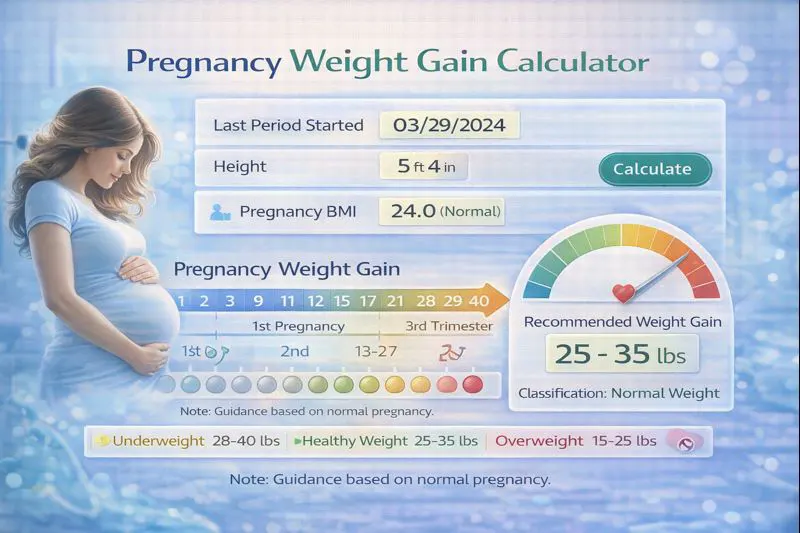
Pregnancy weight gain is a natural and essential part of carrying a healthy baby. Our Pregnancy Weight Gain Calculator helps expectant mothers monitor their weight progression throughout all three trimesters, ensuring both maternal and fetal health remain optimal.
This calculator is designed for pregnant women worldwide who want to:
- Track healthy weight gain based on pre-pregnancy BMI categories
- Monitor weekly progress against medical recommendations from WHO and international health authorities
- Understand personalized targets for singleton and multiple pregnancies
- Receive evidence-based guidance without complicated medical jargon
The calculator uses internationally recognized standards from the World Health Organization and the American College of Obstetricians and Gynecologists. Whether you're accessing this from a clinic in Dubai Healthcare City or your home in Sharjah, you'll receive the same trusted, medically-sound recommendations used by healthcare providers globally.
html
These are general guidelines based on international medical standards. Always consult your healthcare provider for personalized medical advice tailored to your specific situation.How the Pregnancy Weight Gain Calculator Works
Our calculator determines your recommended weight gain range using a scientifically-validated methodology based on your pre-pregnancy BMI (Body Mass Index) and current gestational week.
Calculation Methodology
Step 1: Pre-Pregnancy BMI Classification
First, we calculate your pre-pregnancy BMI using the standard formula: BMI = weight (kg) / height (m)². This places you into one of four categories, each with different recommended weight gain ranges.
Step 2: Recommended Total Weight Gain Ranges
| Pre-Pregnancy BMI Category | BMI Range | Recommended Total Gain (Singleton) | Recommended Total Gain (Twins) |
|---|---|---|---|
| Underweight | Below 18.5 | 12.5-18 kg (28-40 lbs) | Not specified |
| Normal Weight | 18.5-24.9 | 11.5-16 kg (25-35 lbs) | 16.8-24.5 kg (37-54 lbs) |
| Overweight | 25-29.9 | 7-11.5 kg (15-25 lbs) | 14-22.7 kg (31-50 lbs) |
| Obese | 30 and above | 5-9 kg (11-20 lbs) | 11.3-19 kg (25-42 lbs) |
Step 3: Week-by-Week Projection
The calculator distributes the recommended gain across your pregnancy timeline. Most weight gain occurs in the second and third trimesters, with approximately 0.5-2 kg in the first trimester0.2-0.5 kg per week afterward, depending on your BMI category.
Important Considerations: These ranges are guidelines, not strict rules. Individual variations are normal. Always consult your healthcare provider for personalized medical advice, especially if you have gestational diabetes, hypertension, or other pregnancy complications.
Practical Weight Gain Examples
Understanding how the calculator works becomes clearer with real-world scenarios. Here are three different situations expectant mothers commonly experience:
Example 1: Normal Weight, First-Time Mother
Scenario: Fatima, a 28-year-old teacher living in Abu Dhabi, is 20 weeks pregnant with her first baby.
Input Values:
- Pre-pregnancy weight: 62 kg
- Height: 165 cm (1.65 m)
- Current week: 20
- Pregnancy type: Singleton
Calculation:
Pre-pregnancy BMI = 62 ÷ (1.65 × 1.65) = 22.8 (Normal Weight)
Recommended total gain: 11.5-16 kg
At week 20 (midpoint), expected gain: 5.75-8 kg
Weekly gain target for remaining weeks: 0.4-0.5 kg/week
Result: Fatima should have gained approximately 5.75-8 kg by week 20. If she's gained 6.5 kg, she's perfectly on track. She should continue gaining about 0.4-0.5 kg weekly for the remaining 20 weeks.
Example 2: Overweight, Twin Pregnancy
Scenario: Sarah, a 32-year-old marketing manager in Dubai Marina, is expecting twins and is currently at week 28.
Input Values:
- Pre-pregnancy weight: 78 kg
- Height: 170 cm (1.70 m)
- Current week: 28
- Pregnancy type: Twins
Calculation:
Pre-pregnancy BMI = 78 ÷ (1.70 × 1.70) = 26.9 (Overweight)
Recommended total gain for twins: 14-22.7 kg
At week 28, expected gain: approximately 10.5-17 kg
Target gain by week 37 (typical twin delivery): 14-22.7 kg total
Result: Sarah should aim to have gained 10.5-17 kg by week 28. Twin pregnancies require more weight gain, but because she's in the overweight category, the range is moderated to balance maternal and fetal health.
Example 3: Underweight, Later Pregnancy
Scenario: Priya, a 26-year-old yoga instructor in Sharjah, has a naturally slim build and is at week 32 of her pregnancy.
Input Values:
- Pre-pregnancy weight: 48 kg
- Height: 160 cm (1.60 m)
- Current week: 32
- Pregnancy type: Singleton
Calculation:
Pre-pregnancy BMI = 48 ÷ (1.60 × 1.60) = 18.75 (Normal Weight, but close to underweight)
Recommended total gain: 11.5-16 kg
At week 32, expected gain: approximately 10-14 kg
Remaining weeks to week 40: 8 weeks
Result: By week 32, Priya should have gained 10-14 kg. If she's gained 11 kg, she's on target. She needs to gain approximately 0.5-0.6 kg per week for the final 8 weeks to reach the healthy 11.5-16 kg total range. Her healthcare provider may monitor her closely to ensure adequate nutrition intake for both her and the baby.
Medical Guidelines and Considerations
Pregnancy weight gain recommendations are based on extensive medical research coordinated by international health organizations. The ranges provided account for the weight of the baby, placenta, amniotic fluid, increased blood volume, breast tissue, uterus growth, and necessary maternal fat stores.
Special Medical Situations:
- Gestational Diabetes: Women diagnosed with gestational diabetes may need modified weight gain targets and should follow their endocrinologist's specific recommendations
- Pre-eclampsia Risk: Sudden, rapid weight gain could indicate fluid retention and requires immediate medical attention
- Multiple Pregnancies: Triplets or higher-order multiples have different guidelines that should be discussed with a maternal-fetal medicine specialist
- Eating Disorders History: Women with past or current eating disorders need specialized support and monitoring throughout pregnancy
Common Mistakes to Avoid
Many expectant mothers make these preventable errors when monitoring their weight during pregnancy:
- Comparing to others: Every pregnancy is unique. Your friend's weight gain pattern may be completely different from yours and still be healthy
- Restricting calories excessively: Pregnancy is not the time for weight loss. Inadequate calorie intake can harm fetal development
- Ignoring sudden changes: Gaining 2-3 kg in one week or no weight gain for several weeks both warrant a conversation with your doctor
- Obsessive daily weighing: Weekly weigh-ins are sufficient. Daily fluctuations from water retention are normal and not meaningful
Expert Tips for Healthy Weight Management
Healthcare professionals recommend focusing on quality nutrition rather than calorie counting. Include plenty of protein-rich foods, colorful vegetables, whole grains, and healthy fats. Stay hydrated with adequate water intake throughout the day.
Gentle exercise, when approved by your healthcare provider, supports healthy weight gain. Walking, swimming, and prenatal yoga are excellent options for most pregnant women in the UAE's climate, especially during cooler morning hours or in air-conditioned facilities.
Start Tracking Your Pregnancy Weight Journey Today
Use our free Pregnancy Weight Gain Calculator to monitor your progress throughout all three trimesters. Input your pre-pregnancy measurements and current week to receive personalized recommendations based on international medical guidelines.
Remember, this calculator provides general guidance and should complement—not replace—regular prenatal care. Always discuss your weight gain pattern, nutrition needs, and any concerns with your obstetrician, midwife, or maternal health specialist. Healthcare facilities across the UAE, from Dubai's top hospitals to community clinics in Sharjah and Abu Dhabi, provide excellent prenatal monitoring and support.
Your pregnancy journey is unique. Focus on nourishing yourself and your growing baby with healthy lifestyle choices, adequate rest, and regular medical care for the best outcomes.