 OnlineCalculator
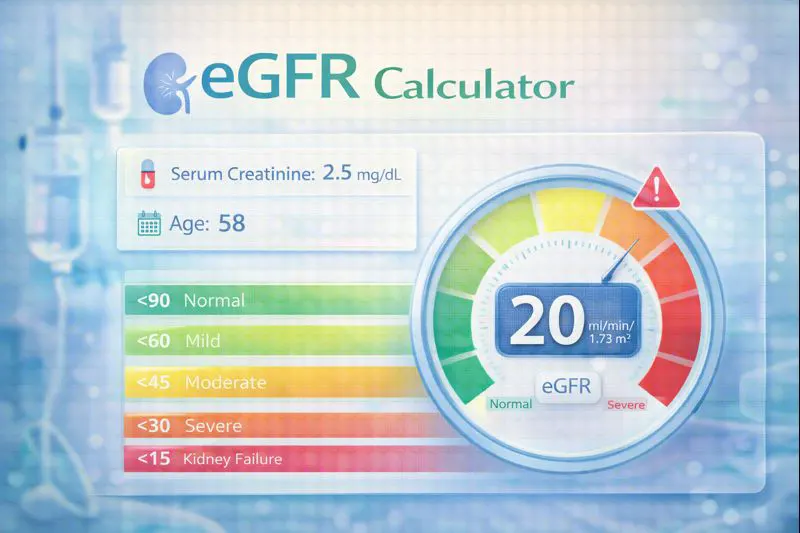
What is an eGFR Calculator?
The eGFR (estimated Glomerular Filtration Rate) calculator is a medical tool that estimates how well your kidneys are filtering blood. It uses your serum creatinine level, age, gender, and race to calculate the volume of blood filtered by your kidneys per minute. This measurement is essential for detecting kidney disease, monitoring kidney function, and adjusting medication dosages.
Provided by Online Calculator UAE, this Health & Fitness calculator offers accurate results using internationally recognized formulas.
Key Benefits:
- Early Detection: Identify kidney problems before symptoms appear
- Clinical Accuracy: Uses CKD-EPI and MDRD formulas recommended by nephrologists
- Instant Results: Get your eGFR value and CKD stage classification immediately
- Treatment Monitoring: Track kidney function changes over time
html
⚠️ This calculator provides estimates for educational purposes only. Always consult a qualified healthcare provider for medical diagnosis and treatment decisions.How Does the eGFR Calculator Work?
The eGFR calculator uses your serum creatinine level (a waste product measured through blood tests) along with demographic factors to estimate your kidney's filtering capacity. Healthy kidneys filter about 90-120 mL/min/1.73m², while values below 60 indicate potential kidney disease.
Calculation Methods
Our calculator supports two internationally recognized formulas:
1. CKD-EPI Formula (Recommended): The Chronic Kidney Disease Epidemiology Collaboration equation, introduced in 2009, provides more accurate results, especially for eGFR values above 60. It's the preferred method by the National Kidney Foundation.
2. MDRD Formula: The Modification of Diet in Renal Disease equation has been used since 1999 and remains valid, though slightly less accurate at higher eGFR values.
Required Inputs
- Serum Creatinine: Measured in mg/dL or μmol/L from a blood test
- Age: Your current age in years (affects muscle mass and creatinine production)
- Gender: Males typically have higher creatinine due to greater muscle mass
- Race: African American/Black individuals may have slightly different reference ranges
eGFR Stages and What They Mean
The calculator automatically classifies your results into CKD stages:
- Stage 1 (≥90): Normal or high kidney function
- Stage 2 (60-89): Mild reduction in kidney function
- Stage 3a (45-59): Mild to moderate reduction
- Stage 3b (30-44): Moderate to severe reduction
- Stage 4 (15-29): Severe reduction
- Stage 5 (<15): Kidney failure requiring dialysis or transplant
Example 1: Healthy Young Adult
Patient Profile: Ahmed, a 28-year-old male marketing professional in Dubai, goes for his annual health check at a clinic in Dubai Healthcare City. His blood test shows a serum creatinine level of 0.9 mg/dL.
Input Values:
- Age: 28 years
- Gender: Male
- Creatinine: 0.9 mg/dL
- Race: Non-African American
Calculation (CKD-EPI): Using the formula, Ahmed's eGFR = 108 mL/min/1.73m²
Result Interpretation: This falls into Stage 1 (Normal kidney function). Ahmed's kidneys are filtering blood efficiently, and he should continue maintaining a healthy lifestyle with proper hydration and regular check-ups.
Example 2: Middle-Aged Woman with Borderline Results
Patient Profile: Fatima, a 62-year-old female teacher living in Abu Dhabi, has been monitoring her kidney function due to family history of diabetes. Her recent creatinine test shows 1.3 mg/dL.
Input Values:
- Age: 62 years
- Gender: Female
- Creatinine: 1.3 mg/dL
- Race: Non-African American
Calculation Result: eGFR = 44 mL/min/1.73m²
Result Interpretation: This indicates Stage 3b CKD (Moderate to severe reduction). Fatima should consult a nephrologist for comprehensive kidney function assessment and potentially adjust her diet, manage blood pressure levels, and monitor protein intake carefully.
Example 3: Elderly Patient with High Creatinine
Patient Profile: Robert, a 75-year-old retired engineer in Sharjah, has been experiencing fatigue. His doctor ordered kidney function tests showing creatinine at 2.1 mg/dL.
Input Values:
- Age: 75 years
- Gender: Male
- Creatinine: 2.1 mg/dL
- Race: Non-African American
Calculation Result: eGFR = 29 mL/min/1.73m²
Result Interpretation: This shows Stage 4 CKD (Severe reduction). Robert needs immediate nephrology consultation, dietary modifications, medication review, and preparation for potential dialysis or transplant evaluation.
Factors That Affect eGFR Accuracy
Several conditions can influence your eGFR results beyond actual kidney function:
- Muscle Mass: Bodybuilders or athletes may have higher creatinine levels naturally
- Diet: High protein intake or recent meat consumption can temporarily elevate creatinine
- Medications: Certain drugs like cimetidine or trimethoprim affect creatinine secretion
- Dehydration: Can artificially lower eGFR readings
- Pregnancy: Requires specialized equations for accurate assessment
When to Retest
A single abnormal eGFR doesn't confirm kidney disease. Doctors typically recommend retesting after 3 months to confirm persistent kidney dysfunction. Regular monitoring is essential for individuals with diabetes, hypertension, or family history of kidney disease.
Common Mistakes to Avoid
- Not fasting before the test (when required by your laboratory)
- Using incorrect creatinine units (mg/dL vs μmol/L)
- Ignoring borderline results without follow-up
- Self-diagnosing without consulting healthcare professionals
Expert Tips for Kidney Health
Maintain healthy kidney function by staying well-hydrated (8-10 glasses of water daily), limiting sodium intake, managing your blood sugar levels if diabetic, avoiding excessive pain medication use, and getting regular health screenings if you're at risk.
Take Control of Your Kidney Health Today
Use our free eGFR calculator above to estimate your kidney function in seconds. Remember that this calculator provides educational estimates and should not replace professional medical advice. If your results indicate potential kidney issues, consult a nephrologist or your primary care physician for comprehensive evaluation and personalized treatment planning.
For accurate results, ensure you have your recent blood test report showing serum creatinine levels. International users can access this tool from anywhere, and results are calculated using globally accepted clinical formulas trusted by healthcare providers worldwide.