 OnlineCalculator
What Is a Nap Calculator?
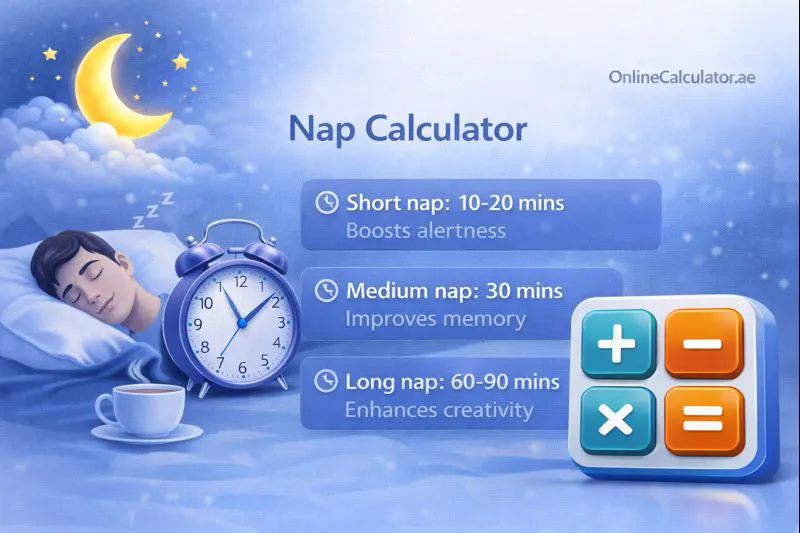
A nap calculator uses sleep cycle science to determine when you should wake up from a nap to avoid grogginess. Unlike random alarm settings, this tool calculates precise wake-up times aligned with your natural sleep stages, helping you maximize rest in minimal time.
Key benefits of using our nap calculator:
- Avoid sleep inertia – Wake during light sleep phases, not deep sleep
- Boost productivity – Power through UAE's demanding work schedules with renewed energy
- Customized timing – Get nap recommendations based on your available time
- Science-backed results – Based on sleep cycle research from health organizations
Our nap calculator incorporates recommendations from the National Sleep Foundation and CDC research on optimal nap durations. Perfect for UAE residents managing long working hours, irregular shifts, or simply looking to enhance their daily energy levels.
Advanced Nap Calculator for UAE - WordPress Elementor HTML Widget Paste this complete code into an Elementor HTML widget Tab Navigation Quick Calculate Tab ⚡ ⚠️ 🌟 Custom Nap Tab Schedule Tab Results Section Results will be dynamically inserted here
How the Nap Calculator Works
Your body cycles through distinct sleep stages during any period of rest. Understanding these stages is crucial for effective napping. Each complete sleep cycle takes approximately , comprising light sleep, deep sleep, and REM phases.
The Sleep Cycle Breakdown
Stage 1 (Light Sleep): This initial phase lasts about 5-10 minutes. Your brain begins transitioning from wakefulness to sleep. Waking during this stage leaves you feeling alert with minimal grogginess.
Stage 2 (True Sleep): Heart rate slows and body temperature drops. This stage provides genuine rest and improved cognitive function. Most power naps target this stage.
Stage 3 (Deep Sleep): Your body performs essential repair functions. Waking during deep sleep causes significant sleep inertia—that disoriented, foggy feeling that can last 30 minutes or longer.
REM Sleep: Typically begins around 70-90 minutes after falling asleep. This stage supports memory consolidation and creative problem-solving.
Calculation Method
The calculator adds approximately 14 minutes for the average time to fall asleep, then calculates wake times based on nap type:
- Power Nap (10-20 minutes): Stay in light sleep stages only
- Recovery Nap (30-60 minutes): Generally avoided—high risk of waking during deep sleep
- Full Cycle Nap (90 minutes): Complete one entire sleep cycle for maximum restoration
Most sleep experts recommend either the 20-minute power nap or the 90-minute full cycle nap. Times between 30-60 minutes often result in worse grogginess than no nap at all.
Example 1: The Dubai Corporate Professional
Scenario: Ahmed works as a financial analyst in DIFC with typical hours from 9:00 AM to 6:00 PM. After lunch meetings, he experiences an energy dip around 2:00 PM and has a 30-minute window before his next call.
Calculation:
- Current time: 2:00 PM
- Available time: 30 minutes
- Recommended nap type: Power nap (20 minutes)
- Time to fall asleep: 5-7 minutes (assuming office rest area)
- Set alarm for: 2:25 PM
Result: Ahmed wakes from light sleep, returns to his desk feeling alert, and maintains productivity through his afternoon meetings without affecting his nighttime sleep at home in Dubai Marina.
Example 2: The Night Shift Worker
Scenario: Priya works as a nurse at a hospital in Abu Dhabi, handling 12-hour night shifts from 7:00 PM to 7:00 AM. Before her shift begins, she needs restorative rest at her apartment near Yas Island.
Calculation:
- Current time: 4:00 PM
- Available time: 2 hours before preparing for work
- Recommended nap type: Full cycle nap (90 minutes)
- Time to fall asleep: 14 minutes (average)
- Set alarm for: 5:45 PM
Result: Priya completes one full sleep cycle including REM sleep, waking refreshed and cognitively sharp for her demanding hospital shift. The timing leaves adequate buffer before her 7:00 PM start time.
Example 3: The Remote Worker During Ramadan
Scenario: Khalid works remotely for a tech company and observes Ramadan fasting. During the holy month, working hours are reduced, but he experiences fatigue between Dhuhr and Asr prayers.
Calculation:
- Current time: 1:30 PM
- Available time: 25 minutes before afternoon prayer
- Recommended nap type: Power nap (15-20 minutes)
- Time to fall asleep: 10 minutes (post-fasting fatigue)
- Set alarm for: 1:55 PM
Result: Khalid's brief rest before prayer time helps him manage fasting fatigue while maintaining his spiritual schedule and work commitments. For tracking prayer times and schedules, consider using time tracking tools.
Best Time to Nap
The optimal nap window falls between 1:00 PM and 3:00 PM, aligning with the natural post-lunch energy dip. For UAE residents, this coincides with the afternoon break period common in many workplaces.
During summer months (June to September), when outdoor work is prohibited between 12:30 PM and 3:00 PM according to UAE Ministry of Human Resources regulations, this rest period becomes especially valuable for outdoor workers.
Common Napping Mistakes to Avoid
- Napping after 4:00 PM: Late naps disrupt nighttime sleep and can worsen next-day fatigue
- Choosing 30-45 minute durations: This timing typically ends during deep sleep, causing severe grogginess
- Drinking coffee before lying down: Wait until after your nap—caffeine takes 20-30 minutes to take effect, making it ideal as a post-nap boost
- Bright environments: Even brief exposure to bright light can prevent sleep onset. Use blackout curtains or an eye mask
Tips for Better Naps
Set your environment to approximately 18-20°C for optimal sleep. Many UAE residents use air conditioning during naps, which supports quality rest. If napping at your office, noise-canceling earbuds or a white noise app can help block distractions.
Keep your nap schedule consistent when possible. Your body's internal clock benefits from regular timing, whether you're working standard hours in Sharjah or managing a flexible schedule from a Dubai co-working space.
Start Calculating Your Perfect Nap Time
Use the nap calculator above to find your optimal wake-up time based on when you plan to start napping. Whether you need a quick 20-minute energy boost between meetings or a full 90-minute restoration after an overnight shift, precise timing makes all the difference.
For comprehensive wellness tracking, Online Calculator UAE offers additional tools for time and date calculations, helping you manage schedules, count working days, and optimize your daily routine.
Note: This calculator provides general recommendations based on sleep science research. Individual sleep needs vary. If you experience persistent fatigue or sleep difficulties, consult a healthcare provider.